In this article4 min read
Heres a number that should terrify every CTO in America: 95%.

Thats the percentage of enterprise AI projects delivering zero measurable return according to MIT. Not low returns. Zero. And it gets worse.
S&P Global reports 42% of companies abandoned most of their AI initiatives in 2025. Thats up from 17% just one year earlier. RAND Corporation puts the overall AI project failure rate at 80% – twice the rate of non-AI technology projects.
So what separates the 5% who succeed from everyone else?
After researching five leading AI evaluation platforms and dozens of case studies, the pattern is clear. The winners treat AI quality like software quality. They test continuously. They catch regressions before users do. And they use specialized tools built for the job.
The Evaluation Gap

Building a demo is easy. Getting it to production is brutally hard.
The MIT study found that 60% of organizations evaluated AI tools. Only 20% reached pilot stage. And just 5% reached production with measurable impact. The drop-off happens because enterprise systems dont adapt, dont retain feedback, and dont integrate into workflows.
Traditional software has unit tests, integration tests, and CI/CD pipelines catching bugs before deployment. AI systems? Most teams fly blind. They find out somethings broken when customers complain.
This is where AI evaluation tools enter the picture.
The Five Platforms Leading the Charge
Ive spent weeks digging into the major players. Heres what each brings to the table:
- Braintrust closes the loop between production and development. Every production trace becomes a test case. Their customers include Notion (10x faster issue resolution), Zapier (improved from sub-50% to 90%+ accuracy), and Coursera (90% learner satisfaction). The key differentiator: evaluation-first architecture that connects CI/CD directly to production monitoring.
- Arize AI brings enterprise ML observability expertise to LLMs. Their Phoenix platform offers OpenTelemetry-based tracing, drift detection, and embedding analytics. Strong choice for teams already using traditional ML who need unified monitoring. They raised $70M in Series C funding in early 2025.
- Galileo specializes in hallucination detection. Their Luna-2 small language models run evaluations at sub-200ms latency for roughly $0.02 per million tokens. Thats 97% cheaper and 91% faster than using GPT-3.5 for the same task. When you need real-time guardrails, speed matters.
- Fiddler AI targets regulated industries. Their platform delivers unified observability for both traditional ML and generative AI with sub-100ms guardrails. Named to CB Insights AI 100 in 2025. Good fit for finance, healthcare, and government deployments requiring audit trails.
- Maxim AI takes an end-to-end approach covering simulation, evaluation, and observability. They emphasize cross-functional UX enabling both engineers and product managers to work in the same interface. Claims to help teams ship AI agents 5x faster.
The CI/CD Revolution

The real shift happening in production AI is treating evaluations like software tests.
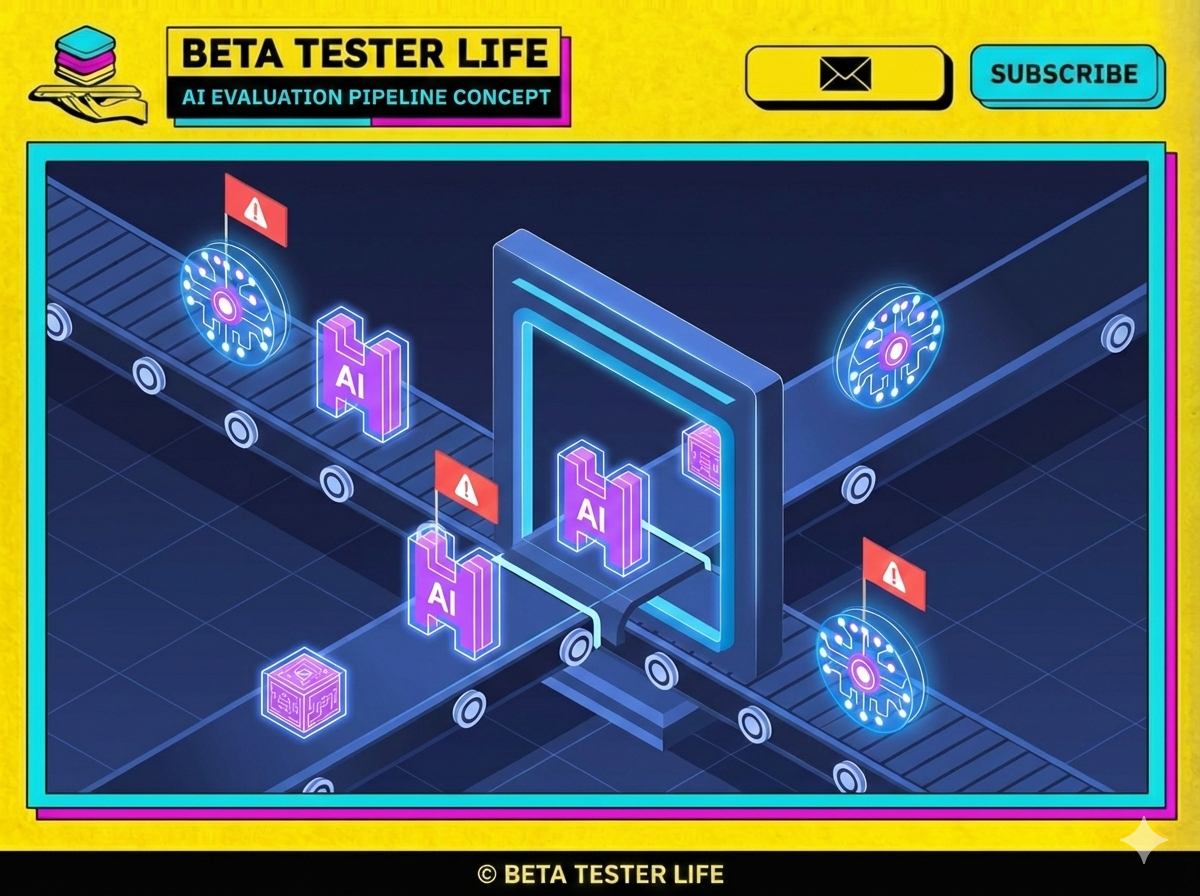
Organizations implementing automated LLM evals in their CI/CD pipelines catch regressions before users do. Every prompt change, model swap, and code update gets validated automatically. Quality gates prevent broken AI from reaching production.
Stanford researchers emphasize that systematic evaluation can reduce production failures by up to 60%. The teams succeeding with AI arent just building better models. Theyre building better processes.
The Bottom Line
AI evaluation isnt glamorous. It wont make headlines like the latest foundation model. But its the difference between a impressive demo and a system your customers can trust.
The 5% succeeding with enterprise AI share a common trait: they measure relentlessly. Pick an evaluation platform. Integrate it into your pipeline. Start catching problems before your users do.
Because in production AI, you cant improve what you cant measure.
Research Sources
Primary Research:
- MIT NANDA – The GenAI Divide: State of AI in Business 2025
- S&P Global Market Intelligence – 2025 Enterprise AI Survey (1,000+ enterprises)
- RAND Corporation – Root Causes of AI Project Failure (2024)
- Gartner – AI Project Success Rates and Timeline Analysis
- Stanford CRFM – Foundation Model Transparency Index 2025
Platform Documentation:
- Braintrust – https://www.braintrust.dev/articles/
- Arize AI – https://arize.com/blog/ and Phoenix documentation
- Galileo AI – https://galileo.ai/ and Hallucination Index methodology
- Fiddler AI – https://www.fiddler.ai/ platform documentation
- Maxim AI – https://www.getmaxim.ai/articles/
Academic Papers:
- Luna: An Evaluation Foundation Model (Galileo, arXiv 2024) – 97% cost reduction findings
- ChainPoll Hallucination Detection Methodology – 85% correlation with human feedback
- Stanford HAI – On the Opportunities and Risks of Foundation Models
Industry Analysis:
- VentureBeat – Galileo hallucination detection tools coverage (Aug 2025)
- Cisco Investments – Fiddler AI observability interview
- Google Cloud Blog – Fiddler AI integration case study
- CB Insights AI 100 2025 – Fiddler AI recognition
- Arize AI Series C ($70M) funding announcement (Feb 2025)
#AI #MachineLearning #MLOps #LLM #ArtificialIntelligence #TechNews #ProductionAI #DataScience #AITools #TechTrends #StartupLife #SoftwareEngineering #DevOps #AIEvaluation

Written by Kevin Campbell
Thirty years of technology, delivery and organisational change—translated into practical thinking for people doing the work.
Continue the journey
One thought leads to another.
Scroll to explore
 AI Governance
Reliable AI Systems: A Practical Way to Control Risky Outputs
AI Governance
Reliable AI Systems: A Practical Way to Control Risky Outputs
 AI Governance
AI Job Design: How to Make Agents Earn Their Place
AI Governance
AI Job Design: How to Make Agents Earn Their Place
 AI Governance
AI Leadership Judgement: How to Make Better Decisions With AI
AI Governance
AI Leadership Judgement: How to Make Better Decisions With AI
 AI Governance
AI Build Versus Buy: How to Make Better Ownership Decisions
AI Governance
AI Build Versus Buy: How to Make Better Ownership Decisions
 AI Governance
The Hidden Cost of AI Conversations: When Your Chatbot Becomes Your Influencer
AI Governance
The Hidden Cost of AI Conversations: When Your Chatbot Becomes Your Influencer
 Learning & Mindset
How to Learn So Fast It’s Almost Unfair: The 3C Protocol
Learning & Mindset
How to Learn So Fast It’s Almost Unfair: The 3C Protocol
Conversation
Add to the thinking
Questions, experience and thoughtful disagreement are welcome.