In this article3 min read
Why Britain’s AI infrastructure Boom Just Hit an Unexpected Wall
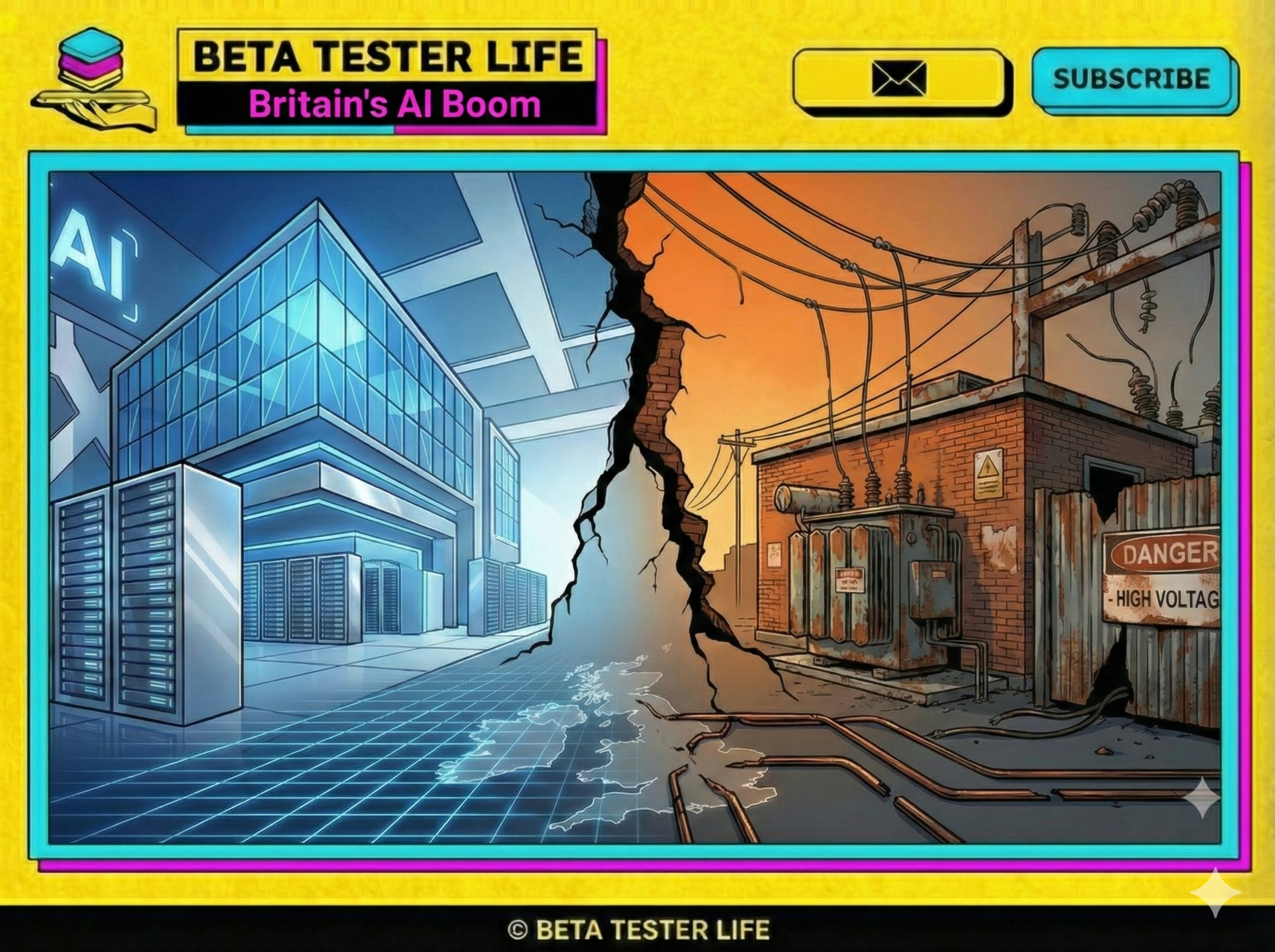
The UK’s ambitious AI infrastructure sprint is colliding with a 20th‑century power grid. The fascinating story isn’t about breakthrough models—it’s about a massive failure in energy allocation that’s threatening Britain’s entire tech strategy. 🏗️⚡
AI infrastructure – The Hidden Crisis Stalling UK Tech
Recent coverage of the UK’s AI build‑out reveals a shocking bottleneck:
- Speculative applications have overwhelmed the national grid connection pipeline
- Landowners are gaming the system by applying simply because they host power lines, not because they have viable data‑center projects
- Multi‑year delays now face legitimate developers because grid processes were never designed for thousands of high‑power AI proposals arriving simultaneously
Framework: AI as an Infrastructure Class
View AI campuses through a three‑layer Infrastructure Stack Lens:
1. AI Infrastructure Physical Layer – Power, Water, Land, and Fibre
- UK energy costs sit roughly 75% above pre‑invasion level—among Europe’s highest
- AI workloads are sharply increasing demand at the worst possible moment
- Critical mismatch: Grid reinforcement takes 7–15 years while GPU fleets turn over in 18–36 months
2. AI Infrastructure Capacity Allocation Layer – Who Gets Scarce Megawatts
- Speculative growth‑zone bids expose dangerous flaws in first‑come allocation without viability filters
- The devastating result: “paper data centers” clogging queues while never reaching financial close
- Zero mechanisms to prioritize viable projects over speculative land grabs
3. AI Infrastructure Governance Layer – Rules and Incentives
- Traditional grid planning assumed predictable industrial loads
- AI loads are lumpy, bursty, and unpredictable—clustered near talent, cheap land, and subsea cables, not where grids are strongest
- Treating AI as critical infrastructure demands explicit priority rules: research facilities, public workloads, and export clusters before speculative capacity
30‑Year Solution: Engineering‑Rigorous Response – AI infrastructure
Transform reactive allocation into strategic planning:
- Replace project‑by‑project connections with zonal capacity markets and long‑term auctions
- Bundle land, power, and backhaul as a unified asset class for AI computing
Build flexibility into the foundation:
- By 2050, grid codes will treat large AI campuses as controllable industrial loads
- Mandatory obligations to shed non‑critical training during constrained hours
- Demand‑response and workload‑shifting become essential design principles
Establish industry standards:
- Regulators need a shared “AI Load Template”
- Standardized assumptions for ramp rates, utilization, and diversification
- Updates every 2–3 years as technology evolves
The Bottom Line
Britain’s AI ambitions are colliding with infrastructure reality. Without radical changes to grid capacity allocation—abandoning first‑come‑first‑served for strategic prioritization—expect years of delays while speculators monopolize the queue.
Frameworks over hype. Tomorrow’s winners won’t promise the flashiest AI breakthroughs. They’ll solve the unglamorous challenges of power allocation, thermal management, and grid integration.
Tags: #betatesterlife #FrameworksOverHype #PracticalAI #AIInfrastructure #EnergySystems

Written by Kevin Campbell
Thirty years of technology, delivery and organisational change—translated into practical thinking for people doing the work.
Continue the journey
One thought leads to another.
Scroll to explore
 AI Governance
Reliable AI Systems: A Practical Way to Control Risky Outputs
AI Governance
Reliable AI Systems: A Practical Way to Control Risky Outputs
 AI Governance
AI Job Design: How to Make Agents Earn Their Place
AI Governance
AI Job Design: How to Make Agents Earn Their Place
 AI Governance
AI Leadership Judgement: How to Make Better Decisions With AI
AI Governance
AI Leadership Judgement: How to Make Better Decisions With AI
 AI Governance
AI Build Versus Buy: How to Make Better Ownership Decisions
AI Governance
AI Build Versus Buy: How to Make Better Ownership Decisions
 Field Notes
The Future of Robotics: Soft Material Manipulation Breakthroughs
Field Notes
The Future of Robotics: Soft Material Manipulation Breakthroughs
 Field Notes
The Future of Healthcare: How Medicine Will Transform Our Lives by 2075
Field Notes
The Future of Healthcare: How Medicine Will Transform Our Lives by 2075
Conversation
Add to the thinking
Questions, experience and thoughtful disagreement are welcome.