
Some people and organisations not only survive but thrive when everything around them is uncertain.
I have often wondered late at night, staring at the ceiling, what sets those people apart. It’s not luck, and it’s definitely not that they have it easier. The truth goes much deeper.
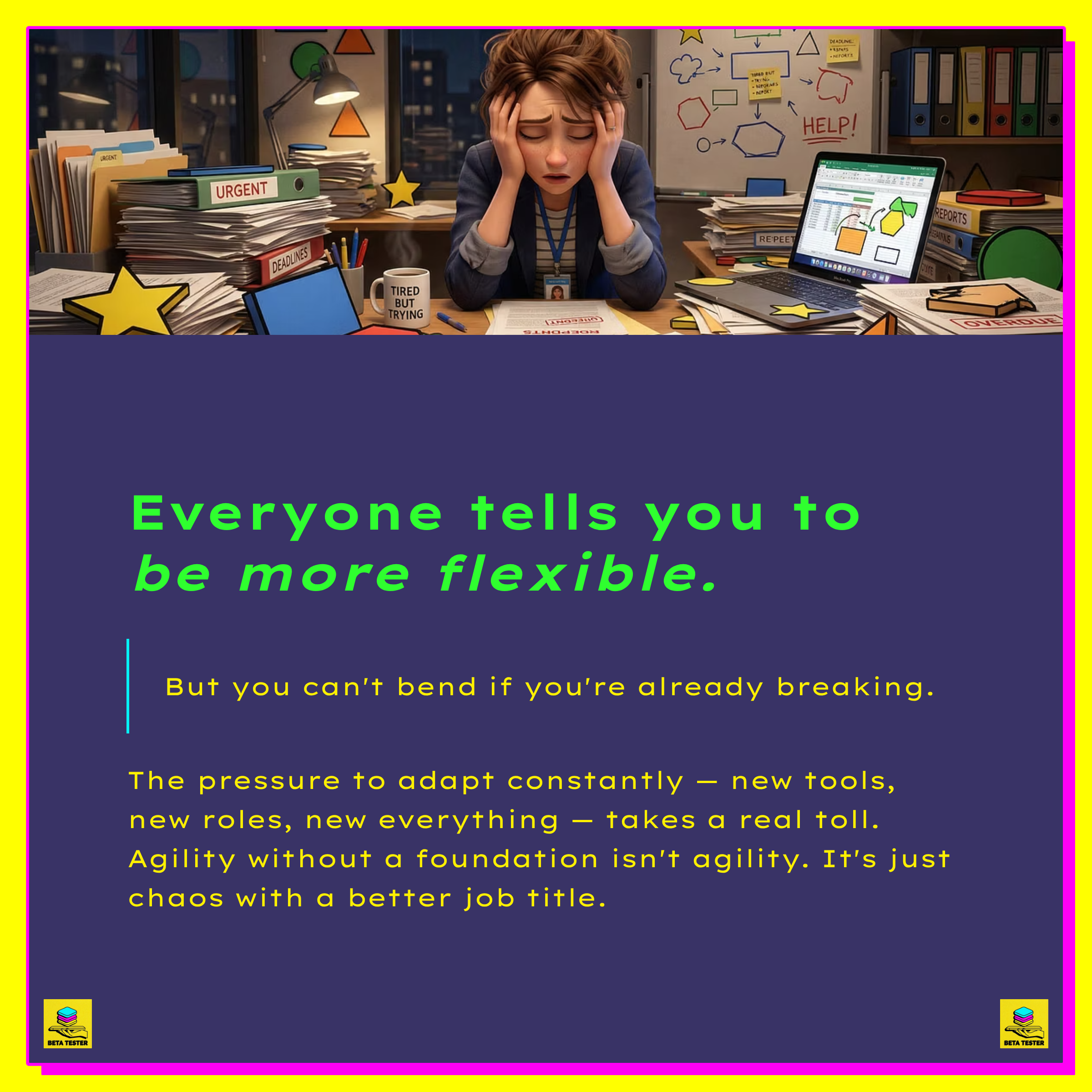
I’ve learned, through hundreds of conversations with entrepreneurs, creators, and leaders, that the world is changing faster than ever. And in that constant motion, resilience, flexibility, and agility aren’t just skills—they’re lifelines. They’re the difference between being swept away by change and using it as fuel for your evolution. But here’s the uncomfortable bit: everyone talks about these traits, but few people really know how to build them.
Conversations about the invisible foundation beneath agility are rare. One cannot simply ‘hack’ their way to flexibility; real, tangible anchors are needed to remain steady, even during storms. For me, those anchors have been the people I trust, the routines I hold onto, and the quiet spaces that let me breathe. Without them, even the strongest eventually drift. Building agility starts with identifying your anchors.
That’s the central idea behind Liz Tran’s new book, AQ: A New Kind of Intelligence for a World That’s Always Changing. Tran, an executive coach to over 200 founders and CEOs, explores what it really means to build that inner anchor. While many reports—like those from the Institute for Defence Analyses—focus on how organisations respond to complexity, few address the deeper tools that help us stay grounded. Tran introduces a powerful concept: the Agility Quotient (AQ) and the practice of finding our anchors.
What are AQ anchors?
Anchors are the people, places, and routines that help keep you grounded. When you’re facing what Tran calls CHURN, which stands for Change, Hiccups, Uncertainty, Rupture, and Newness, anchors help prevent you from spiralling.

There are three types of anchors.
People anchors are all about interpersonal connections, such as family, friends, mentors, therapists, and colleagues. When you feel lost, these are the people who give you insight and unconditional support.
Place anchors are physical locations that feel safe and stable, such as your home, a favourite park, a library, or a place of worship. These spaces are filled with love, history, nature, or spirit. Research shows that comfortable spaces can reduce stress and anxiety. (Sayyed & Al-Azhari, 2025).
Routine anchors are the regular habits that give your life structure, even when things feel unpredictable. It could be your morning coffee, a daily walk, or a weekly call with your parents. These routines don’t have to be big; they just need to be consistent.
Why this matters right now
The numbers tell a clear story. According to Gallup’s 2025 State of the Global Workplace report, global employee engagement has dropped to 21%. One in five employees said they felt lonely the day before, and for entirely remote workers, that figure rises to 25%. According to the World Economic Forum’s Future of Jobs Report 2025, 59 out of every 100 workers will need training by 2030, highlighting the urgent need for upskilling to meet evolving workplace demands. (The Future of Jobs Report 2025, n.d.)

Resilience starts with a stable foundation—your unique mix of anchors. Tran identifies four AQ Archetypes, each with a distinct anchoring style: Novelists lean on reflection and solo routines, Astronauts seek new experiences and use place anchors, Firefighters handle crises with people anchors, and Neurosurgeons rely on structured routines. Understanding your archetype helps you choose the right anchors.
Everyone starts in the same place: taking stock of what they already have. It is important to identify who helps you feel grounded, where you feel safe, and which small routines bring you peace. Once these are known, try to protect them.
Many people frequently ask how they can find and strengthen their own anchors amidst the messiness of real life.
Knowing you need anchors is one thing—building them is something else entirely.
Here’s something practical: take sixty seconds—no more, no less—and honestly write down your anchors. One person, one place, one routine. Don’t overthink it. These are the things and people that give you that feeling of calm or clarity, even for just a moment. Now, pick one and make a promise to yourself for the next seven days. You send a text to your person anchor. Maybe take a walk in your safe place. You also stick to your morning ritual, even if it’s just making coffee. The moment you bring intention to these anchors, you start to change everything.
The paradox I’ve seen time and time again is clear. The people who are best at adapting seem unstoppable. They are also the ones who are most deeply anchored. They don’t float through chaos; they root themselves, and that’s what gives them the freedom to move.
How can organisations help employees build or maintain their anchors at work?
Organisations and leadership play a vital role in supporting employees’ anchors—the people, places, and routines that provide stability during times of turbulence or “CHURN.”
Here are the key ways organisations can support this:
Managers Must Serve as the Primary Anchor
The most direct way an organisation can help is by making sure its managers act as stabilisers for their teams. A manager’s job is to be the team’s main anchor by providing clarity and calm when things go wrong or when employees feel overwhelmed. Poor managers do the opposite by increasing stress and causing chaos, while effective managers remain a steady, grounding presence. By keeping a clear vision of employees at their best and guiding them back to it, managers become a strong source of care and support.
Foster “People Anchors” and Mentorships
Organisations should encourage employees to build strong connections at work. Employees can create a network of “Agility Advisors” by learning the AQ Archetypes of their colleagues and asking them for input and different perspectives. Organisations should also support mentorship and help employees maintain these relationships, such as setting a regular schedule to meet with a mentor every quarter, even when things get busy.
Encourage Teammates to Anchor One Another Using Their Strengths
Employees can anchor each other using their AQ Archetypes.
- Astronauts instil courage, confidence, and a sense of mission when colleagues feel lost.
- Novelists offer support through clarity and structure, helping overwhelmed teammates get organised and plan their goals.
- Firefighters anchor their peers through swift problem-solving, stepping unflinchingly into moments of crisis to help out.
- Neurosurgeons provide grounding through their steadfast loyalty, effort, and consideration for their peers.
Cultivate the Workplace as a “Place Anchor”
Place anchors meet our basic need for a safe space. They are secure and stable. This helps reduce stress and anxiety. Organisations should create a comfortable physical or virtual workplace. This environment should help employees feel grounded. It should also make them feel like they belong.
Establish Supportive “Routine Anchors”
Routines give people a sense of control in unpredictable work lives. Organisations can help maintain routine anchors by building helpful habits into the workday. For instance, managers might set aside time, biweekly or monthly, for the team to pause and reflect on learning and growth. Organisations should also respect personal routines. These include daily walks or time for developing new skills. Such routines help employees recharge and stay focused.
Are you ready to build your anchors and boost your agility? Start today by subscribing to BetaTesterLife. You’ll get weekly tips. You’ll get research-backed guidance on AI, psychology, and the future of work. All of this is to help you thrive and put these anchor strategies into practice. Hit subscribe now and take your first step toward a more resilient future.
Research Sources
- Tran, L. (2026). AQ: A New Kind of Intelligence for a World That’s Always Changing. Crown Currency / Penguin Random House. — https://www.penguinrandomhouse.com/books/786825/aq-by-liz-tran/
- Big Think (Jan 2026). The Agility Quotient: Why we need to move on from IQ and EQ. — https://bigthink.com/business/the-agility-quotient-why-we-need-to-move-on-from-iq-and-eq/
- CNBC (Feb 2026). How to tell if you have AQ, the new ‘non-negotiable’ skill of highly successful people. — https://www.cnbc.com/2026/02/05/aq-is-the-new-intelligence-that-highly-successful-people-havehow-to-tell-if-you-have-it.html
- Afford Anything Podcast (Mar 2026). Intelligence in the Age of AI: Why AQ Matters Most (w/ Liz Tran). — https://affordanything.com/691-your-iq-wont-save-your-career-your-aq-might-with-liz-tran/
- World Economic Forum (Jan 2025). The Future of Jobs Report 2025: Skills Outlook. — https://www.weforum.org/publications/the-future-of-jobs-report-2025/in-full/3-skills-outlook/
- WEF (Dec 2025). Beyond the inflection point: The new forces shaping the transformation of work. — https://www.weforum.org/stories/2025/12/work-transformation-skills-agility-growth/
- Gallup (2025). State of the Global Workplace 2025 Report. — https://www.gallup.com/topic/employee-wellbeing.aspx
- Mind Share Partners & Qualtrics (2025). 2025 Mental Health at Work Report. — https://www.mindsharepartners.org/2025-mental-health-at-work-report
- Yılmaz & Çıtak (2025). Perceived social support and psychological distress in work-related quality of life. Scientific Reports 15, 641. — https://www.nature.com/articles/s41598-024-81548-y
- Ontario Psychological Association (2025). The Power of Routine: How Establishing Daily Habits Can Improve Mental Health. — https://www.psych.on.ca/Public/Blog/2025/The-Power-of-Routine-How-Establishing-Daily-Habits
- Youn, C., Kang, M. & Lee, J. (2025). Biophilic Design and Restorative Effects: A Neuropsychological Study. IJERPH, 22(10), 1571. — https://www.mdpi.com/1660-4601/22/10/1571
- Altaf & Billington (2025). Biophilic Design Interventions for Indoor Environments. Stanford University / SAGE. — https://journals.sagepub.com/doi/10.1177/00139165251347579
- Xing & Stevenson (2025). Exploring biophilic building designs to promote wellbeing and stimulate inspiration. PLoS ONE, 20(3). — https://pmc.ncbi.nlm.nih.gov/articles/PMC11878902/
- Reward Gateway | Edenred (Aug 2025). Workplace Loneliness: New Research for 2025. — https://www.rewardgateway.com/blog/workplace-loneliness-new-research-for-2025-rger
- Near Future (Mar 2026). AI makes IQ useless. Agility quotient arrives. — https://en.futuroprossimo.it/2026/03/lai-rende-il-qi-inutile-arriva-il-quoziente-di-agilita/
Leave a Reply