BTL Topic index
A living archive
Learning & Mindset
Learning systems, personal development, psychology, mental models.
The working lens
Look for the system beneath the story.
Ideas earn their place here by being useful after the presentation ends and the real work begins.
01 Follow the consequences
02 Keep people in the system
03 Test it against reality
The working index
Ideas worth carrying into the work.
Start with the lead essay. Then follow whichever question feels most useful now.
-

Not Everyone Needs to Learn Everything
Open article ↗: Not Everyone Needs to Learn EverythingNot everyone needs the same depth of technical knowledge. A practical framework for deciding who needs deep capability, broad literacy or permission to wait.
-
Self-Awareness Is Not Introspection. It Is System Monitoring.
Open article ↗: Self-Awareness Is Not Introspection. It Is System Monitoring.Self-awareness is often sold as a private act: sit quietly, look inward, know yourself. That is useful, but too small. In real decisions, self-awareness works more like system…
-
The Learning Triage: How to Decide What to Learn Next
Open article ↗: The Learning Triage: How to Decide What to Learn NextYou will never be current again — a four-question triage for deciding what deserves your finite learning attention, and what you can safely stay behind on. Somewhere on…
-
Progressive Delivery: The Missing Loop in DevOps
Open article ↗: Progressive Delivery: The Missing Loop in DevOpsRead or skip? Read, especially if you work in product, DevOps, platform engineering, Agile delivery, AI adoption, or organisational change. This is not just a book about feature…
-
The 80% Problem: Why Your Brain Is Outsourcing Its Judgement to AI
Open article ↗: The 80% Problem: Why Your Brain Is Outsourcing Its Judgement to AICognitive surrender AI decision-making – Eight in ten people accept a wrong answer from an AI without questioning it. Not occasionally. Not when tired or distracted. Consistently, across…
-
The Science of Happiness: What Actually Works
Open article ↗: The Science of Happiness: What Actually WorksFour brain chemicals drive happiness — dopamine, serotonin, oxytocin, endorphins. Here’s what the 2025 WHO and Stanford research actually says works.
-
The Entry-Level Collapse: What Happens When AI Eats Year One
Open article ↗: The Entry-Level Collapse: What Happens When AI Eats Year OneAI is not just cutting entry-level roles. It is cutting the apprenticeship system that produces the seniors you will need in 2030. Four practical moves to protect the…
-
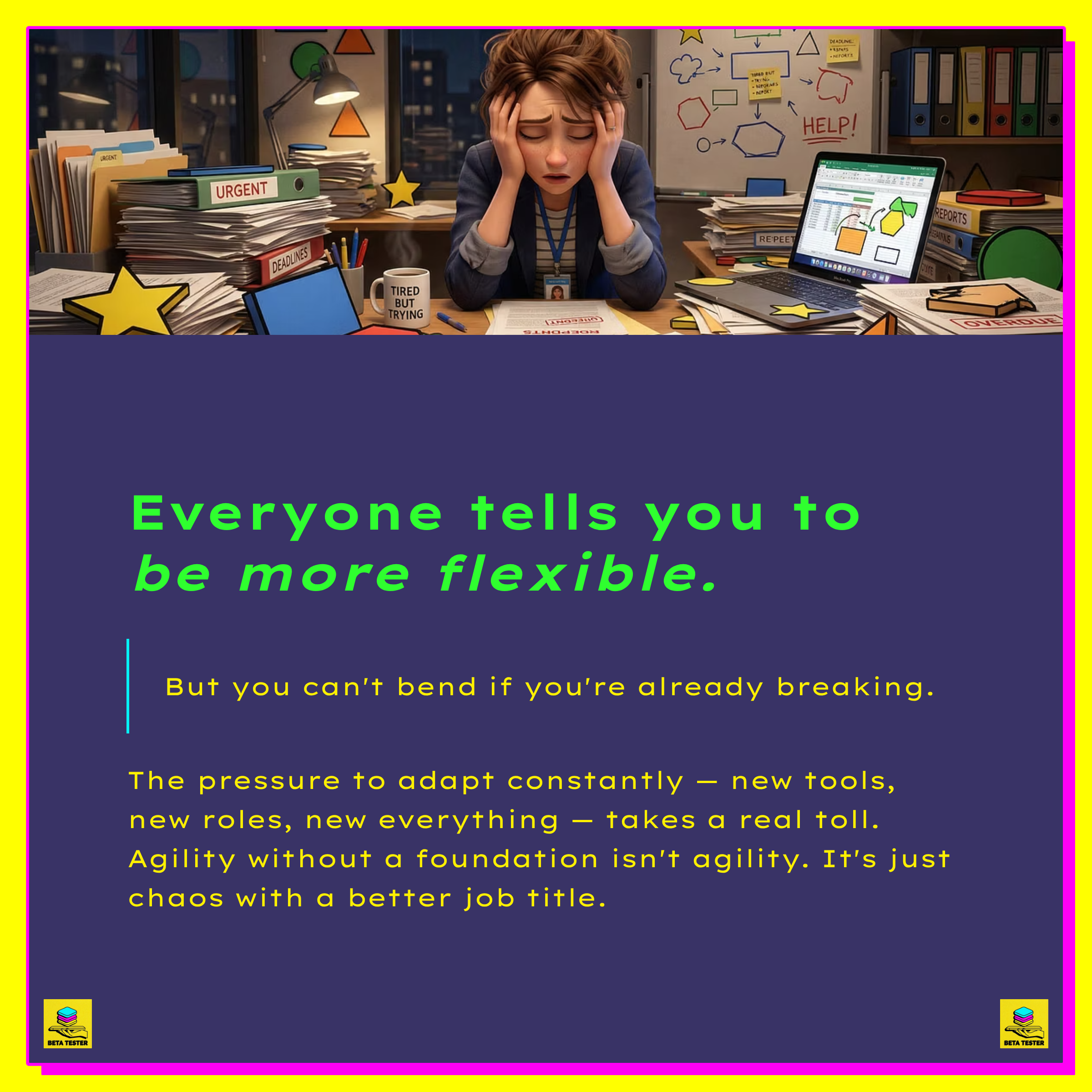
AQ Anchors Explained: The People, Places and Routines That Keep You Grounded During Change
Open article ↗: AQ Anchors Explained: The People, Places and Routines That Keep You Grounded During ChangeDiscover AQ anchors from Liz Tran’s Agility Quotient framework. Learn how people, places and routines provide stability during uncertainty and build real resilience.
-
There Is No Wrong Turn
Open article ↗: There Is No Wrong TurnYou know that feeling—the nagging sense that you took a wrong turn somewhere? It’s the feeling that your career choice, the relationship you stayed in, or the city…
-
Niksen: Why the Dutch Art of Doing Nothing Could Save Your Brain
Open article ↗: Niksen: Why the Dutch Art of Doing Nothing Could Save Your BrainNiksen, a Dutch concept of “doing nothing,” promotes idleness as beneficial for mental health and creativity. Neuroscientific studies show that the brain thrives during rest through its default…





Change the lens
The useful questions refuse to stay in their lane.
Move sideways through the archive. The strongest connections often appear between categories.
Still carrying a question?